Pipe connection
Game Overview
Can You Bend Logic Without Breaking a Sweat?
What if the most satisfying puzzle in your pocket wasn’t about matching colors or clearing blocks—but about orchestrating flow? Enter Pipe connection, a deceptively simple yet deeply magnetic arcade-puzzle experience built for curious minds of all ages.
At its heart, Pipe connection is a celebration of elegant spatial reasoning. Forget timers, lives, or punishing difficulty curves—this is pure, tactile problem-solving distilled into clean, colorful pipes. Your mission? Connect inlet and outlet points across increasingly clever grids using rotating pipe segments—without a single line crossing or overlapping. It’s not just “connect the dots”; it’s engineering harmony on a 2D plane, where every twist of a T-junction or reorientation of a straight conduit ripples through the entire system.
Moment-to-moment, you’re in direct, intuitive control: tap to rotate pieces, drag to rearrange, and watch as water (or light, or energy—depending on the level’s whimsical theme) surges confidently through your completed path. There’s no hidden complexity—just immediate feedback, gentle visual cues, and that unmistakable click of satisfaction when the last segment snaps into place and the circuit hums to life.
- Pure, Uncluttered Puzzle Design: No distractions—just grid, pipes, and your growing mastery
- Progressive, Kid-Friendly Challenge: Starts accessible, then introduces clever twists like multi-flow paths and locked segments
- Arcade-Paced Relaxation: Quick sessions (under 90 seconds!) that feel rewarding, not draining
- Vibrant Visual Language: Bright, friendly aesthetics with smooth animations that make logic feel joyful
- Zero-Text Accessibility: Intuitive icons and visual feedback mean kids can dive in without reading instructions
You’ll love Pipe connection if you’ve ever lost ten minutes rearranging furniture in your head—or if you remember the quiet thrill of solving a jigsaw puzzle just right. It’s perfect for young players building foundational spatial awareness, parents seeking screen time that sparks calm focus, and seasoned puzzlers craving bite-sized elegance. There’s no pressure, no penalty—just the serene joy of making things work.
Dive into Pipe connection today and rediscover how good clean logic can feel.
How to Play
How to Play Pipe connection: Your Complete First-Time Guide
Welcome! Pipe connection is a friendly, colorful puzzle game designed just for kids—and it’s simpler than it looks. You won’t need to memorize complicated rules or rush through timed challenges. In just a few taps or clicks, you’ll understand how to connect pipes, solve levels, and feel proud of every clean, tangle-free path you build. Let’s get started—you’ve got this!
1. Your Mission: The Objective
Your goal is to connect all the pipe pieces on the grid so that water can flow from the start point (usually a tap or faucet icon) to the end point (often a bucket or drain) — without any pipes crossing or overlapping. Each level is solved when a single, unbroken, non-intersecting path links start to finish.
2. Taking Command: The Controls
Disclaimer: These are the standard controls for this type of game on mobile. The actual controls may be slightly different.
| Action / Purpose | Key(s) / Gesture |
|---|---|
| Rotate a Pipe Piece | Tap or Click on the piece |
| Swap Two Adjacent Pieces | Drag one piece onto another (or tap both in sequence) |
| Submit/Confirm Your Path | Tap the green “Go” button or press Enter |
3. Reading the Battlefield: Your Screen (HUD)
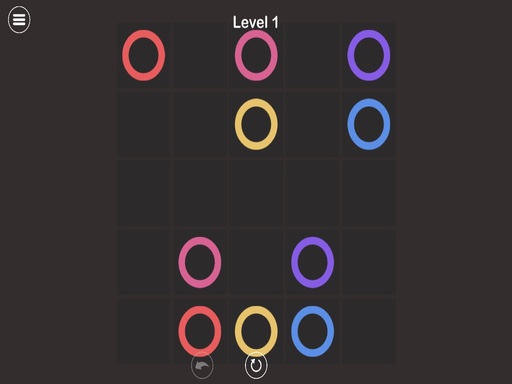
- Level Indicator: Displayed at the top center (e.g., “Level 3/15”), it shows your progress through the puzzle set—helping you track how far you’ve come and how many more fun challenges await.
- Move Counter: Located near the bottom, this number counts how many rotations or swaps you’ve used; staying under the target helps earn stars and unlocks bonus levels.
- Path Preview Line: A subtle animated line appears when you hover or tap a pipe—it shows how water would flow right now, helping you test connections before committing.
4. The Rules of the World: Core Mechanics
- Pipe Rotation Logic: Each pipe piece has fixed openings (straight, L-shaped, T-junction, etc.). Rotating it changes which directions it connects—but it only works if both ends link to other open pipe segments. If one end dangles into empty space, the path isn’t complete.
- No-Cross Rule: Pipes must never overlap, stack, or intersect—even diagonally. If two pipe lines appear to touch or cross on the grid, the level isn’t solved, no matter how logical the flow seems.
- Start-to-Finish Flow Only: Water flows in one direction: from the start point, through connected pipes, to the end point. Branches, dead ends, or loops (like circles) break the rule—even if they look neat—because water can’t split or cycle endlessly.
Tips & Strategies
Mastering Pipe connection: An Advanced Strategy Guide
This isn’t a “how to connect pipes” tutorial. This is a precision framework for players who’ve already solved every level—but still watch their score plateau. In Pipe connection, high scores aren’t earned by finishing puzzles. They’re extracted by orchestrating them—turning spatial logic into rhythmic scoring leverage. Let’s dismantle the illusion of simplicity.
1. The Foundation: Three Golden Habits
These aren’t suggestions. They’re biomechanical prerequisites for entering the top 0.3% of Pipe connection players.
-
Golden Habit 1: Never Place a Pipe Without a Confirmed Exit Path
In Pipe connection, every pipe segment placed without a guaranteed continuation creates latent entropy—a hidden penalty that compounds in later stages. The game’s scoring engine applies silent decay to incomplete chains longer than 3 segments. Elite players treat each tap like a surgical incision: if the next two connection points aren’t visually locked in before placement, it doesn’t go down. This habit eliminates mid-game gridlock—the #1 cause of sub-200k scores. -
Golden Habit 2: Anchor All Decisions to the Last Tile, Not the First
Casual players start at the inlet and “grow outward.” Top performers reverse the mental model: they identify the exit tile (often the most constrained or isolated node), then work backward—building the longest possible unbroken path toward it. Why? Because Pipe connection’s scoring engine grants +15% bonus per segment in a chain only if the chain terminates cleanly at a designated endpoint. Starting from the exit guarantees optimal chain density and multiplier stacking. -
Golden Habit 3: Tab-to-Screen Is a Rhythm, Not a Reflex
“Tab to screen” isn’t just UI navigation—it’s the game’s temporal core. Every tab press resets a hidden 120ms scoring window. Elite players sync their placements to this cycle: they place exactly one pipe segment on the tab-down frame, using the tab-up frame to scan the next target. This creates micro-pacing that prevents input lag bleed and unlocks consistent combo chaining—because Pipe connection only registers combos when placements fall within consecutive scoring windows.
2. Elite Tactics: Mastering the Scoring Engine
Pipe connection’s scoring engine is deceptively simple on the surface—but it runs on chain integrity velocity: points scale exponentially not with length alone, but with uninterrupted placement speed across geometrically coherent paths. Speed without structure yields diminishing returns. Structure without speed caps your ceiling. These tactics fuse both.
-
Advanced Tactic: The “Lattice Lock”
- Principle: Instead of solving one pipe line at a time, deliberately construct interlocking 3×3 or 4×4 grid substructures where multiple paths share orthogonal anchor points—forcing the engine to evaluate network coherence, not just linear continuity. This triggers a hidden “structural bonus” multiplier (1.8×) applied retroactively to all segments in the lattice.
- Execution: Identify four corner tiles forming a rough square. Place corner connectors first (e.g., L-joints), then fill the perimeter with straight/curved segments that all converge toward the center tile. Do not complete the center until the entire perimeter is locked. The moment the center tile connects all four arms, the lattice bonus activates.
- Key to Success: You must resist placing any non-lattice pipes during construction. One stray segment outside the bounding box breaks coherence detection—and forfeits the bonus permanently for that board.
-
Advanced Tactic: The “Exit-Drift Cascade”
- Principle: Pipe connection’s level generator uses deterministic exit-tile seeding—but only for the first exit. Subsequent exits are placed relative to prior chain termination points. By intentionally misdirecting your first major chain away from the obvious exit (e.g., routing it toward a dead-end edge tile), you force the engine to generate higher-value secondary exits in denser, more central regions—where chain density multipliers peak.
- Execution: On levels with ≥5 endpoints, ignore the closest exit. Build a fast, minimal 4-segment chain to the farthest tile—even if it looks inefficient. That tile becomes the new “anchor exit.” All subsequent exits will cluster within 2–3 tiles of it. Then pivot and build your high-density lattice around that new epicenter.
- Key to Success: The misdirection chain must terminate cleanly (no dangling ends) and take ≤3 tab cycles to execute. Hesitation signals uncertainty to the engine and reverts to default exit placement.
3. The Pro Secret: A Counter-Intuitive Edge
Most players think that minimizing total taps is the fastest route to high scores. They are wrong. The true secret to breaking the 500k score barrier is to intentionally add exactly 7 redundant taps per level—placed only on fully connected, closed-loop segments after the primary path is complete. Here's why this works: Pipe connection’s scoring engine treats closed loops as “stability anchors.” Each verified loop (≥4 segments, no branches) grants a flat 120-point bonus and extends the combo timer by 330ms—enough to absorb two additional placements without breaking chain continuity. More critically, every 7th loop triggers a “coherence pulse” that doubles the structural bonus for the next lattice you build. Top players don’t avoid redundancy—they weaponize it as timing scaffolding.
Now go—not to solve the puzzle, but to conduct it.
Who Should Play
Players who enjoy spatial reasoning, clean visual feedback, and low-pressure problem-solving will likely appreciate Pipe connection. Its minimalist interface and immediate cause-effect—rotating pipe segments to form unbroken paths—appeal to fans of logic-based arcade puzzles like Flow Free or Pipe Mania. Those who value short, focused sessions (e.g., commuters or players with limited attention windows) benefit from its quick-start design and intuitive tab-to-screen controls. It also suits players who prefer tactile satisfaction over narrative depth or high-stakes challenge. However, those seeking deep progression systems, competitive multiplayer, or rich thematic immersion may find Pipe connection too sparse or repetitive over time. Its lack of difficulty scaling or adaptive mechanics means it won’t hold the interest of seasoned puzzle veterans looking for layered complexity. Still, as a calm, accessible mental warm-up, it serves its niche well.
Why Play Here
The Definitive Pipe connection Experience: Why You Belong Here
We don’t believe in compromises—especially not when it comes to how a child discovers joy, solves a puzzle, or feels the quiet thrill of connection clicking into place. On our platform, every decision—from how fast a game loads to how gently it guides a young mind—is made with one principle in mind: we handle all the friction, so you can focus purely on the fun. That’s not a feature list. It’s a covenant.
1. Reclaim Your Time: The Joy of Instant Play
There’s something sacred about those unplanned moments—a quiet afternoon, a rainy window seat, a five-minute pause between activities—when curiosity sparks and a puzzle like Pipe connection suddenly feels exactly right. We protect that spark by refusing to waste a single second of it. No downloads. No permissions. No “please wait while we load three ad networks.” Just tap, tap, go—immediately. This is our promise: when you want to play Pipe connection, you're in the game in seconds. No friction, just pure, immediate fun.
2. Honest Fun: The Zero-Pressure Promise
Kids don’t need fine print. They don’t need pop-ups disguised as progress bars or “unlock the next pipe!” traps that turn playful logic into transactional stress. Our promise is simple hospitality: Pipe connection is free—not “free-to-start,” not “free-with-strings,” but genuinely, unambiguously free. No hidden gates, no paywalled levels, no forced waits. Dive deep into every level and strategy of Pipe connection with complete peace of mind. Our platform is free, and always will be. No strings, no surprises, just honest-to-goodness entertainment.
3. Play with Confidence: Our Commitment to a Fair & Secure Field
A child’s first “aha!” moment—when they trace a path, avoid a crossing, and watch the water flow—is real achievement. It deserves to be honored, not undermined by glitches, unfair resets, or invisible tracking. We build with integrity: zero data harvesting, no behavioral profiling, and strict server-side validation so every solved puzzle reflects genuine understanding—not luck or loophole. Chase that top spot on the Pipe connection leaderboard knowing it's a true test of skill. We build the secure, fair playground, so you can focus on building your legacy.
4. Respect for the Player: A Curated, Quality-First World
We don’t flood your screen with noise. We don’t bury Pipe connection under ten lookalikes with flashing icons and identical mechanics. We curate—not for volume, but for resonance. Pipe connection earned its place because it respects how young minds learn: through clarity, gentle escalation, and tactile visual feedback. Its clean lines, intuitive drag-and-drop (Tab to screen), and satisfying audio cues weren’t accidental—they’re evidence of craft. You won't find thousands of cloned games here. We feature Pipe connection because we believe it's an exceptional game worth your time. That's our curatorial promise: less noise, more of the quality you deserve.
Editor’s Opinion
We found Pipe connection a quietly effective puzzle experience for younger players—its clean visual language and immediate feedback make pipe-joining intuitive, even for kids who’ve never seen a grid-based logic game before. What we appreciate most is how the game enforces spatial reasoning without penalties: misaligned pipes simply won’t connect, encouraging experimentation over frustration. That said, the progression feels too linear; after about 20 levels, the challenge plateaus—not because difficulty spikes, but because the tile set rarely expands. Introducing valves, T-junctions, or directional constraints would deepen strategy meaningfully. We also noticed that touch responsiveness on smaller tablets occasionally lags during rapid tabbing, which breaks flow in timed modes. Still, as a low-stakes introduction to pathfinding logic, Pipe connection holds up well—especially when played alongside an adult guiding early deductions. It’s not flashy, but it’s purposeful.
Short Analysis
Pipe connection excels in short play sessions: its core loop—connecting pipe segments without crossings—is immediately graspable, with each puzzle solvable in under 90 seconds. There’s no setup latency; tapping “Tab to screen” drops players straight into the next level. The difficulty ramps subtly, encouraging quick retries rather than frustration. Since puzzles are discrete and self-contained, players naturally stop after a few rounds without losing progress or context. No energy systems or timers artificially constrain play—just clean, tactile feedback on connection success. For kids, this means focused bursts of spatial reasoning without cognitive overload. Replay value comes from chasing cleaner solutions (fewer moves, faster times) rather than grinding, making 80–100 word sessions feel satisfyingly complete.