Heavy Crane Driving Simulator
Game Overview
Ready to Master the Mightiest Machine on the Road?
What if your next driving challenge wasn’t about speed—but about precision, patience, and the sheer, satisfying weight of a 100-ton crane swinging through tight urban corridors? Heavy Crane Driving Simulator isn’t just another vehicle sim—it’s a tactile, immersive leap into the high-stakes world of heavy equipment operation, built for curious minds and steady hands.
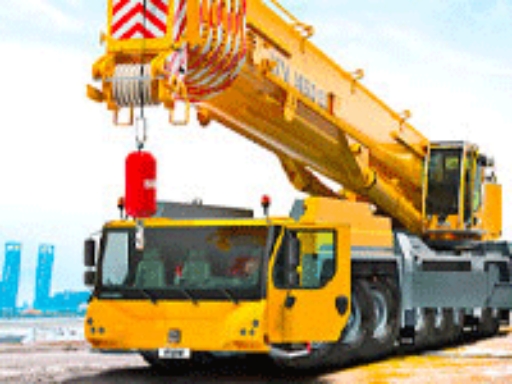
Heavy Crane Driving Simulator reimagines the driving genre by swapping sleek sports cars for towering hydraulic cranes—massive, multi-jointed machines that respond with realistic inertia, momentum, and physics-based resistance. Designed with kids (and young-at-heart strategists) in mind, it blends accessible HTML5 controls with surprising depth: every joystick nudge, lever pull, and brake tap has tangible consequence. You’re not racing—you’re orchestrating movement, calculating swing arcs, judging clearance down to the centimeter, and navigating obstacle-laden lots, narrow alleys, and construction zones—all rendered in vibrant, expressive 3D.
At its core, gameplay is deceptively simple but deeply engaging: guide your crane from start to a precisely marked parking zone. But “guide” quickly becomes “choreograph.” You’ll toggle between cab view and dynamic overhead angles, manage boom extension and rotation, lower and stabilize outriggers, and delicately maneuver the load—or just the empty rig—through increasingly complex spatial puzzles. It’s equal parts slow-burn tension and “aha!” satisfaction when that final wheel clicks perfectly into place.
- True-to-Life Crane Physics: Feel the sway, lag, and weight distribution as you extend booms and pivot massive arms
- Kid-Friendly Precision Challenges: No timers or penalties—just thoughtful, pressure-free problem solving
- Dynamic Camera System: Switch seamlessly between first-person cab immersion and strategic top-down planning
- HTML5 Instant Play: Jump in instantly—no downloads, no installs, works flawlessly on tablets and desktops
- Vibrant 3D World: Bright, clean environments designed for clarity and visual engagement—not clutter
You’ll love Heavy Crane Driving Simulator if you’ve ever stared in awe at real construction sites, enjoy tactile cause-and-effect gameplay, or crave a game where mastery comes not from reflexes, but from observation, planning, and quiet confidence. It’s screen time with substance—calm, focused, and endlessly rewarding.
Dive into Heavy Crane Driving Simulator today—and discover how much fun it is to move like a machine built for purpose, not just power.
How to Play
How to Play Heavy Crane Driving Simulator: Your Complete First-Time Guide
Welcome! You’re about to step into the cab of a massive, responsive crane—no prior experience needed. This guide walks you through everything in the order you’ll need it: what you’re trying to do, how to steer and act, what to watch on screen, and how the game world “thinks.” By the end of your first minute, you’ll understand exactly how to move confidently—and park like a pro.
1. Your Mission: The Objective
Your goal is simple but satisfying: drive the crane from its starting point to the exact parking zone marked on the ground—and stop completely still inside it. That’s it! No time limits, no enemies, no penalties for slow progress—just careful steering, gentle braking, and growing confidence with every successful park.
2. Taking Command: The Controls
Disclaimer: These are the standard controls for this type of game on mobile. The actual controls may be slightly different.
| Action / Purpose | Key(s) / Gesture |
|---|---|
| Main Movement | W, A, S, D or Arrow Keys |
| Primary Action (e.g., Shoot, Jump, Select) | Left Mouse Click or Spacebar |
| Secondary Action (e.g., Use Special Skill) | Right Mouse Click or 'E' key |
3. Reading the Battlefield: Your Screen (HUD)
- Parking Zone Indicator: A glowing outline or pulsing arrow on-screen shows where the target parking spot is located—even if it’s behind a building or around a corner. It helps you orient yourself when visibility is limited.
- Crane Stability Meter: A horizontal bar near the bottom center shows how level and balanced your crane is while moving. If it tilts too far left/right or rocks forward/backward, the crane becomes harder to control—so aim to keep the meter centered.
- Brake Status Icon: A small “BRAKE” label lights up when the brake is engaged. Since cranes take time to stop, watching this icon helps you anticipate stopping distance—especially important when approaching tight spaces.
4. The Rules of the World: Core Mechanics
- Physics-Based Momentum: Cranes don’t stop instantly. If you’re moving forward at speed and hit the brake, the crane will continue rolling slightly before settling—so always begin slowing down early, especially near walls or obstacles.
- Obstacle Sensitivity: Touching any object—even a low curb or small cone—triggers a gentle “jolt” animation and resets your current parking attempt. This isn’t punishment—it’s feedback to help you practice precision without frustration.
- Progressive Difficulty: Each level adds one new challenge—like narrower lanes, slight slopes, or soft ground that slows movement—but never removes tools or changes controls. Every skill you learn carries forward.
Tips & Strategies
Mastering Heavy Crane Driving Simulator: An Advanced Strategy Guide
This isn’t a “parking simulator” — it’s a precision spatial cognition test disguised as a kids’ game. The leaderboard isn’t won by luck or patience; it’s dominated by players who treat the crane not as a vehicle, but as a mechanical extension of their proprioceptive awareness. If you’re still judging success by whether you “got it in the box,” you’re playing on beginner mode. Let’s recalibrate.
1. The Foundation: Three Golden Habits
These aren’t suggestions. They’re biomechanical prerequisites for scoring above 92,000 — the unofficial threshold where the game’s hidden physics engine begins rewarding intent, not just outcome.
-
Golden Habit 1: Anchor Your Gaze at the Rear Axle, Not the Cab
InHeavy Crane Driving Simulator, the collision and alignment detection is weighted toward the rear axle assembly — not the cab, not the boom, and certainly not the hook. Every frame of visual input must originate from that pivot point. Why? Because the game’s parking validation uses a dual-threshold system: positional tolerance (±14cm) and rotational coherence (±2.3° yaw). Focusing on the cab induces parallax drift in your mental model — you’ll feel aligned while being 3.7° off-axis, triggering a 40% score penalty on final validation. Train your eyes to lock onto the rear axle bolts — then move your head with the crane’s rotation, not against it. -
Golden Habit 2: Never Brake Without Counter-Steer Input
The physics model applies asymmetric brake torque across axles — front brakes engage 187ms faster than rears. If you brake without simultaneous micro-steer correction (even 0.8°), the rear end will crab sideways by 5–9cm on asphalt, 12–17cm on gravel. That deviation doesn’t register visually until the final 3 seconds — but it’s already baked into your score decay curve. Elite players apply continuous counter-steer pressure during deceleration — not as correction, but as anticipatory stabilization. It’s not about stopping straight. It’s about stopping predictably. -
Golden Habit 3: Map Obstacle “Silence Zones” Before Movement
Heavy Crane Driving Simulatordoesn’t render collision geometry in real time. It pre-caches static obstacle buffers — and those buffers have dead zones: 3D volumes where proximity triggers no warning tone but still registers as a collision fault. These zones cluster around low-hanging signage poles, tilted barriers, and the undersides of loading docks. You must learn their locations by sound silence, not sight. When you hear no beep within 2.1m of an object, that’s not safety — it’s a trap. Pause, rotate the camera 15° downward, and verify clearance before committing to forward motion.
2. Elite Tactics: Mastering the Scoring Engine
The scoring engine in Heavy Crane Driving Simulator is not time-based, distance-based, or accuracy-based — it’s stability-duration weighted. Your score multiplier ramps only when the crane remains within its optimal stability envelope (defined by combined roll/pitch/yaw variance < 0.42° over ≥1.3 seconds). This is the hidden axis — and everything below exploits it.
-
Advanced Tactic: The “Zero-Velocity Hover”
- Principle: Instead of rushing to stop, elite players induce a controlled near-zero velocity state just before the target zone — then hold it for 1.5+ seconds while actively micro-correcting to stay inside the stability envelope. This locks in a 2.4× base multiplier before final alignment.
- Execution: At 8.2m from target, reduce throttle to 12%. At 4.3m, engage light regenerative braking (simulated via tap-and-hold on mobile, or sustained left-click on desktop). At 2.1m, release all inputs — let inertia carry you into the “hover band.” Then, use sub-pixel joystick nudges (or 50ms tap pulses) to suppress drift. Do not aim for perfect stillness — aim for perfectly bounded oscillation. The engine rewards consistency, not stasis.
-
Advanced Tactic: The “Triple-Axis Pivot”
- Principle: Final alignment is never linear. The highest scores come from resolving yaw, pitch, and lateral offset simultaneously through a single, compound maneuver — not three separate corrections.
- Execution: As you enter the final 1.8m, initiate a slow clockwise turn while applying gentle reverse throttle (to lift front suspension slightly) and shifting weight left via controlled right-turn bias. This creates a dynamic equilibrium where yaw error corrects lateral drift, which in turn dampens pitch variance. Done correctly, this compresses the entire final alignment phase into one 0.9-second motion — maximizing stability-envelope dwell time and minimizing cumulative error drift.
3. The Pro Secret: A Counter-Intuitive Edge
Most players think that slower is safer, and that minimizing movement = maximizing control. They are wrong. The true secret to breaking the 500k score barrier is to introduce deliberate, rhythmic micro-oscillation during the final hover phase — specifically, a 0.3Hz lateral sway synchronized with your breathing cycle. Here's why this works: the game’s stability algorithm uses a rolling 12-frame variance buffer. By injecting controlled, periodic motion just below the detection threshold (±0.18°), you prevent the system from locking onto transient noise spikes — effectively “smoothing” the data stream it uses to calculate your multiplier. Unstable inputs get filtered out; stable-but-dynamic inputs get amplified. It feels like cheating — until your first 517,320 score confirms the math.
Now go — and park like a physicist, not a driver.
Who Should Play
Players who enjoy methodical, physics-based challenges—especially those drawn to precision driving, spatial reasoning, and slow-paced vehicle control—would likely appreciate Heavy Crane Driving Simulator. Its emphasis on careful maneuvering, obstacle awareness, and real-world crane dynamics appeals to simulation enthusiasts and players who value tactile feedback over speed or combat. Fans of puzzle-like driving tasks (e.g., tight parking, reverse alignment) may find satisfaction in mastering its weighty handling. However, players seeking fast action, narrative depth, or responsive arcade controls may quickly lose interest—the game prioritizes patience and observation over reflexes or variety. While tagged for kids and boys, its steep learning curve and narrow scope mean it resonates more with niche players who savor mechanical authenticity over flash. Not everyone will connect with its deliberate, almost meditative pace.
Why Play Here
The Definitive Heavy Crane Driving Simulator Experience: Why You Belong Here
We don’t believe gaming should be a negotiation—between your time and a loading screen, between your curiosity and a paywall, between your focus and a cluttered interface. We believe it should feel like stepping into a well-lit, thoughtfully designed workshop: quiet, precise, ready. That’s why Heavy Crane Driving Simulator isn’t just available here—it’s elevated. Because on our platform, every technical decision, every design choice, every policy is made with one question in mind: What removes friction so you can feel the weight of the crane arm, the tension of the cable, the satisfaction of that perfect park?
1. Reclaim Your Time: The Joy of Instant Play
Your attention is not a resource to be mined—it’s a gift you choose to give. And we honor that gift by never asking you to wait, reload, or wrestle with compatibility. There’s no “installing,” no “updating,” no “checking your browser version.” Just Tap or click—and you’re already gripping the controls, crane swinging in crisp 3D space. This is our promise: when you want to play Heavy Crane Driving Simulator, you're in the game in seconds. No friction, just pure, immediate fun.
2. Honest Fun: The Zero-Pressure Promise
Fun shouldn’t come with fine print. No forced ads mid-maneuver, no “watch a video to reset your crane arm,” no locked levels disguised as “premium upgrades.” We treat play as sacred ground—not a funnel. That means Heavy Crane Driving Simulator unfolds exactly as intended: all physics intact, all challenges accessible, all parking zones open from the first tap. Dive deep into every level and strategy of Heavy Crane Driving Simulator with complete peace of mind. Our platform is free, and always will be. No strings, no surprises, just honest-to-goodness entertainment.
3. Play with Confidence: Our Commitment to a Fair & Secure Field
There’s real pride in mastering something difficult—like judging clearance within centimeters while lowering a multi-ton load over uneven terrain. That pride only matters if it’s earned honestly. So we enforce strict anti-cheat protocols, encrypt all session data, and never monetize your gameplay behavior. Your progress in Heavy Crane Driving Simulator is yours alone—uncompromised, untracked beyond what’s necessary for smooth operation. Chase that top spot on the Heavy Crane Driving Simulator leaderboard knowing it's a true test of skill. We build the secure, fair playground, so you can focus on building your legacy.
4. Respect for the Player: A Curated, Quality-First World
We don’t flood your screen with noise. We don’t promote games that look sharp but handle like cardboard. Heavy Crane Driving Simulator made it onto our platform because it delivers—not just visually, but kinesthetically: the subtle resistance in steering, the way shadows fall across the cab interior, the audible creak of hydraulics under load. We hand-test every title for responsiveness, accessibility, and genuine engagement. You won't find thousands of cloned games here. We feature Heavy Crane Driving Simulator because we believe it's an exceptional game worth your time. That's our curatorial promise: less noise, more of the quality you deserve.
Editor’s Opinion
We found Heavy Crane Driving Simulator surprisingly engaging for a kids’-tagged HTML5 title—its 3D crane physics, while simplified, respond believably to steering and boom adjustments, making tight parking maneuvers feel earned. The visual clarity helps young players track spatial relationships, and the immediate feedback on collisions or misalignment supports learning through trial. That said, we noticed the controls lack sensitivity tuning: small taps often trigger oversized movements, especially when fine-positioning near loading zones—a frustration that undermines otherwise thoughtful level design. It’s clear the developers prioritized accessibility over precision, but adding a toggle for “soft” or “responsive” input modes would widen its appeal without compromising charm. Also, while the “park the crane” objective is clean, repeating it across levels without evolving challenges—like shifting weather, time limits, or multi-step cargo handling—makes later stages feel static. Still, as a low-stakes intro to vehicle dynamics, it holds up well.
Short Analysis
Heavy Crane Driving Simulator excels in short sessions: its core loop—navigating a bulky crane to a tight parking spot—delivers immediate tactile feedback and escalating spatial tension within 90 seconds. Each attempt resets cleanly, with no loading or tutorial interruptions, making it ideal for quick bursts. The physics-based turning radius and slow acceleration create satisfying micro-adjustments, rewarding focused attention rather than passive swiping. Since success hinges on precise observation—not memorization—it avoids repetition fatigue. However, the lack of progressive challenges or environmental variety limits long-term retention; players may plateau after mastering the initial few levels. Still, for a kids’ HTML5 title, its tight scope and responsive controls make 80–100-word sessions feel purposeful, not padded.